
NPN vs PNP Proximity Sensors: Which One Is Right for Your Control System
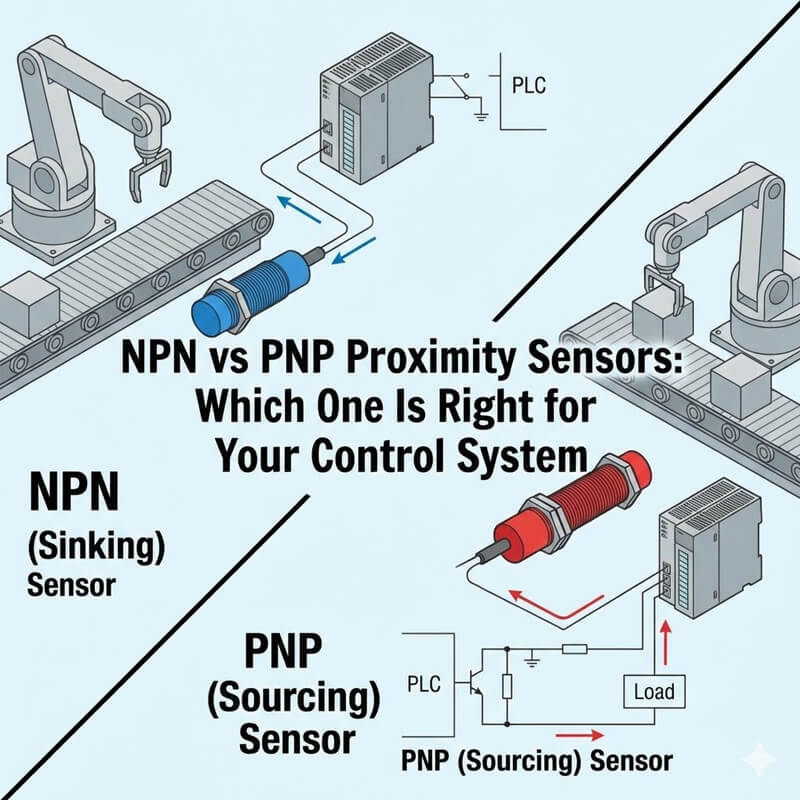
From a system integration perspective, choosing between NPN and PNP proximity sensors is not merely a sensor specification decision—it directly affects the stability and reliability of the entire control system. The output type determines compatibility with PLC input modules, influences grounding design, affects noise immunity, and can even impact long-term maintenance costs.
Field commissioning experience shows that selecting the wrong output type rarely causes a sensor to fail. Instead, it often leads to intermittent false alarms, unstable PLC input signals, or—in severe cases—damage to PLC input modules from improper wiring or electrical mismatch. These issues typically require rewiring and troubleshooting and may result in production downtime that far exceeds the cost of the sensor itself.
For this reason, the core principle of output type selection is system compatibility, not sensor superiority.
Core Differences Between NPN and PNP Outputs (Without Circuit Theory)
The fundamental difference between NPN and PNP outputs lies in their signal logic. Understanding how each output behaves in practical control systems is sufficient for correct selection—there is no need to dive into transistor-level theory.
NPN Output Logic in Industrial Control Systems
NPN outputs operate using a sinking (pull-down) logic. When a target is detected, the sensor connects the output signal to ground (GND), pulling the signal line to a low level and triggering the PLC input.
In industrial practice, NPN proximity sensors are commonly used in Japanese and Taiwanese equipment, as well as in older production lines. These systems typically adopt a common-negative grounding scheme, which naturally aligns with NPN signal logic.
PNP Output Logic in Industrial Control Systems
PNP outputs use a sourcing (pull-up) logic. When a target is detected, the sensor connects the output signal to the positive supply (VCC), pulling the signal line to a high level and triggering the PLC input.
PNP outputs are widely adopted in European equipment and modern standardized control systems. They are particularly well-suited to PLC input modules designed for common-positive grounding, offering improved signal clarity and simplified wiring in modular systems.
Control System Compatibility: The Primary Selection Criterion
Compatibility between the sensor output type and the PLC or control system should always be confirmed before selection. Regional PLC design preferences and input module structures play a decisive role.
PLC Input Types and Regional Preferences
Different PLC manufacturers and regions show clear preferences in input design:
-
Japanese and Taiwanese PLCs (such as Mitsubishi and Omron) commonly support NPN inputs. Even when dual-input capability exists, default configurations are often optimized for NPN sensors.
-
European PLCs (such as Siemens and Schneider) typically favor PNP inputs. Their modular input designs are optimized for stable PNP signal handling, especially in large-scale control systems.
For new production lines, matching the sensor output type to the PLC’s native input design significantly reduces compatibility risks during commissioning.
What Happens When Output Types Are Mismatched
When the sensor output type does not match PLC input expectations, several predictable issues may occur:
-
No signal response: The sensor detects the target, but the PLC does not recognize the signal due to a logic-level mismatch.
-
Intermittent false alarms: Marginally compatible configurations may result in unstable signals, especially under electrical noise or long cable runs.
-
PLC input damage: Forcing incompatible wiring without proper isolation may stress or damage input circuits, leading to costly repairs or module replacement.
Wiring, Grounding, and Noise Considerations
In real-world installations, wiring practices and grounding design strongly influence signal stability and are among the most common sources of system faults.
Ground Reference and Signal Stability
NPN and PNP sensors impose different grounding requirements, and improper grounding is a frequent cause of abnormal signals:
-
NPN sensors rely on a stable common-negative reference. Ground potential differences between sensor and PLC can prevent complete signal pull-down, resulting in false or weak signals.
-
PNP sensors require consistent positive reference grounding. Ground loops in multi-device systems can cause voltage drift and compromise signal recognition.
From engineering practice, single-point grounding—negative for NPN systems and positive for PNP systems—is recommended to minimize potential differences and improve signal stability.
Noise Immunity in Industrial Environments
Electromagnetic interference and long cable runs affect NPN and PNP outputs differently:
-
Long cable runs: PNP high-level signals generally show less attenuation over distance, offering slightly better noise resistance. NPN systems benefit from shielded cables and proper conductor sizing.
-
High-interference environments: Both output types require shielding and noise suppression. Additional pull-up or pull-down measures may be used where necessary to reduce susceptibility to transient interference.
Common Mistakes During Installation and Commissioning
Many on-site issues stem not from sensor or PLC defects, but from habitual selection and wiring mistakes:
-
Selecting output type based on personal habit without verifying PLC input compatibility
-
Assuming NPN and PNP outputs are interchangeable without adjusting wiring logic
-
Relying on laboratory tests that do not reflect real industrial interference and grounding conditions
These problems often remain hidden during testing but emerge after weeks or months of operation in actual production environments.
When NPN Is the Safer Choice
NPN proximity sensors may reduce system risk in the following scenarios:
-
Retrofitting older production lines using Japanese or Taiwanese PLCs with common-negative grounding
-
Installations with complex shared grounding where potential differences are difficult to eliminate
-
High-interference environments where sinking logic offers greater tolerance to voltage fluctuations
When PNP Is the Safer Choice
PNP proximity sensors are generally better suited for modern control architectures:
-
New production lines using European PLCs or modular control systems
-
Standardized installations seeking simplified wiring and easier maintenance
-
Applications with long cable runs where stable high-level signals are preferred
Practical Selection Checklist for Control Engineers
When selecting between NPN and PNP outputs, consider the following priorities:
-
Match sensor output type to PLC native input design
-
Confirm grounding scheme and avoid multi-point ground loops
-
Evaluate cable length and electromagnetic interference levels
-
For retrofit projects, prioritize compatibility with existing system logic
-
Before bulk procurement, validate compatibility through pilot testing
Final Recommendation: Prioritize System Stability Over Habit
From a long-term operational perspective, neither NPN nor PNP is inherently superior. The correct choice is the one that best matches the control system architecture.
Avoid selecting output types purely based on past habits or perceived universality. Instead, confirm PLC input specifications, grounding design, wiring distance, and environmental conditions before making a decision.
This system-oriented approach minimizes rework, reduces commissioning risk, and ensures stable, continuous operation of industrial automation systems.
Bedook proximity sensors are available with both NPN and PNP output options, allowing system-level matching to specific control requirements and improving overall selection safety.
Explore Bedook: Your Trusted Sensor Manufacturer
At Bedook, we specialize in designing, developing, and manufacturing a comprehensive range of proximity sensors and switches. Our extensive product lineup includes:
- Inductive Proximity Sensors
- Capacitive Proximity Sensors
- Photoelectric Sensors
- Ultrasonic Sensors
- Solid State Relays
- Various Accessories
With over 10,000 detailed product variations and a robust R&D team, we take pride in our ability to meet your unique requirements with tailored solutions and reliable performance.
Whether you’re seeking off-the-shelf products or customized designs, Bedook offers the expertise and production capacity to ensure your satisfaction.
Get in Touch Today!
We value your interest in our products and warmly encourage you to send us an inquiry. Let us help you find the perfect sensor solution for your application.
Thank you for considering Bedook—your trusted partner in innovation and quality manufacturing. We look forward to collaborating with you!
 Inductive vs Capacitive Proximity Sensors: Industrial Selection Guide
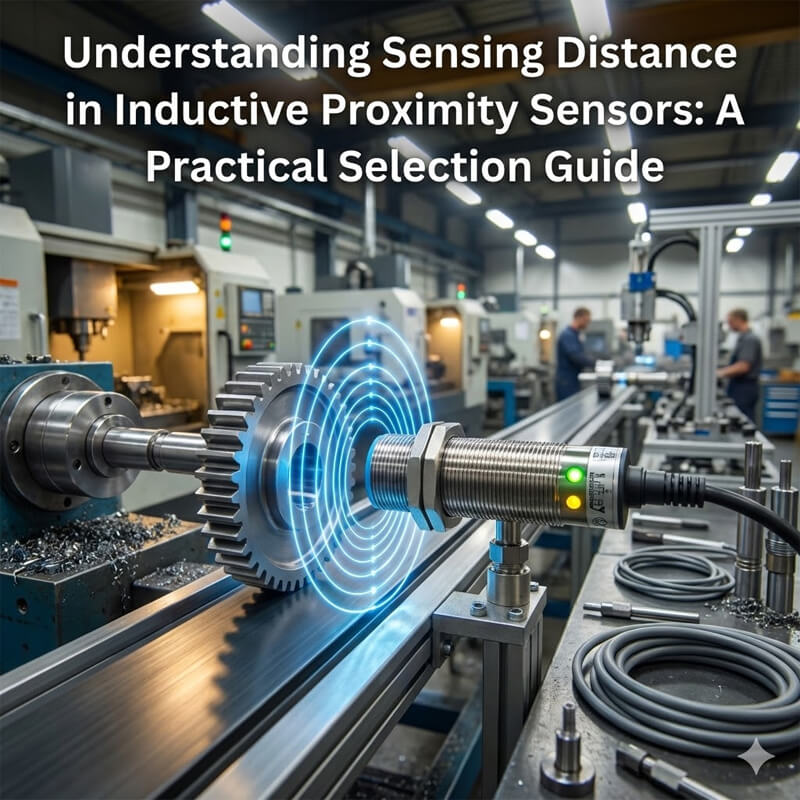 Understanding Sensing Distance in Inductive Proximity Sensors: A Practical Selection Guide