Why Proximity Sensors Fail Prematurely in Industrial Applications

In industrial automation systems, machine tools, and production equipment, proximity sensors are typically designed to operate reliably for many years. However, in real-world installations, sensors sometimes begin to show abnormal signals, intermittent faults, or even complete failure within only a few months.
Extensive field experience shows that most cases of premature sensor failure are not caused solely by poor sensor quality. Instead, they are usually the result of multiple factors acting together, including harsh environments, improper installation, electrical system issues, and incorrect application selection.
From an engineering failure-analysis perspective, understanding these factors helps equipment manufacturers and maintenance engineers identify root causes more quickly, reduce unplanned downtime, and avoid repeated sensor replacements.
What Is Considered Premature Sensor Failure
In industrial applications, premature failure does not necessarily mean that the sensor has completely stopped working. It generally refers to any situation where the sensor’s performance degrades before reaching its expected service life.
Typical symptoms include:
-
Unstable signals, false triggering, or missed detections within a few months of installation
-
Gradually worsening behavior, where occasional anomalies eventually develop into permanent failure
-
No visible physical damage, but the sensor fails to output signals or stops responding after power is applied
It is important to recognize that many failures initially attributed to “poor sensor quality” are actually the result of accelerated wear caused by external factors rather than intrinsic reliability problems.
Harsh Industrial Environments: The Most Common Cause
Dust, liquids, and temperature fluctuations are among the most significant factors that shorten sensor lifespan in industrial environments.
Metal Debris and Dust Contamination
In metal machining processes like cutting, stamping, and forging, airborne metal chips and iron particles often build up on the sensing surface of inductive sensors. Over time, these deposits can disrupt the sensor’s electromagnetic field, leading to decreased sensing distance and signal drift. Fine dust may also enter small gaps in the sensor housing, gradually damaging internal seals and reducing the protection level. Eventually, this contamination can cause internal component failure.
Coolant, Oil Mist, and Moisture
Coolants, cutting oils, and oil-water mixtures are common corrosive agents in industrial facilities.
Even when sensors are rated with a certain ingress protection level, prolonged exposure to chemically aggressive coolant or dense oil mist can accelerate the aging of sealing materials. Once sealing rings degrade or crack, moisture and liquids may penetrate the housing, causing circuit corrosion or short circuits. In automated production lines, this type of hidden degradation is a frequent cause of unexpected sensor failure.
High Temperature Conditions
High-temperature environments—such as those near casting or heat treatment equipment—can significantly affect electronic stability inside sensors.
Extended exposure to elevated temperatures may lead to sensing distance drift, slower response time, and accelerated aging of housing materials and cables. Even if short-term temperature spikes do not immediately destroy the sensor, they may still reduce its overall service life considerably.
Electrical System Issues: An Often Overlooked Root Cause
Many engineers initially attribute sensor failure to environmental or mechanical factors, while electrical system problems are often overlooked despite being a major cause of premature failures.
Unstable Power Supply and Voltage Spikes
Proximity sensors require a stable supply voltage within specified ranges. In many industrial environments, however, power supply fluctuations and transient voltage spikes occur frequently—especially when large motors start or stop or when frequency converters are used.
These transient events can stress or damage the internal protection circuits of the sensor. In some cases, the damage occurs instantly; in others, it leads to gradual degradation of internal electronics without visible external signs.
Grounding Problems and Electromagnetic Interference
Improper grounding, potential differences between ground points, and strong electromagnetic interference from devices such as frequency inverters, welding equipment, or high-power cables can disrupt sensor signals.
In the short term, this may cause intermittent false triggering or signal loss. Over time, continuous exposure to electrical noise can accelerate wear on signal-processing components and eventually lead to complete failure.
Incorrect Wiring
Wiring errors are one of the most direct causes of early sensor failure. Common mistakes include:
-
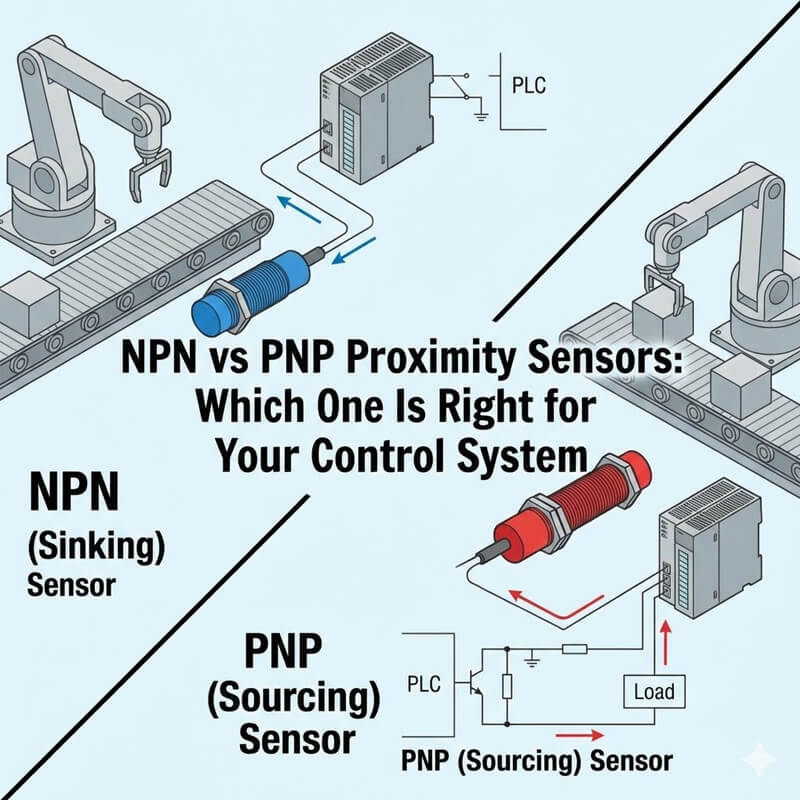
Connecting NPN and PNP output types incorrectly, making them incompatible with PLC input modules
-
Reversing power supply polarity or short-circuiting damaged cables
-
Running long signal cables without proper shielding, which increases interference and signal instability
Such wiring issues can lead to immediate malfunction or gradual deterioration of the sensor’s internal circuitry.
Mechanical Stress and Improper Installation
Improper installation practices can expose sensors to mechanical stress that significantly reduces their service life.
Mechanical Impact and Continuous Vibration
Sensors installed directly in the path of moving workpieces or robotic components may be subjected to accidental impacts or compression. These impacts can damage the sensing face or loosen internal components.
Similarly, sensors mounted on continuously vibrating equipment—such as conveyor systems or stamping machines—may develop intermittent faults as internal solder joints or components gradually loosen.
Incorrect Installation Distance or Mounting Method
Operating sensors outside their rated sensing distance forces them to work continuously at the edge of their detection capability. This unstable operating condition can accelerate internal wear and increase failure probability.
Installation mistakes are also common when flush-mount and non-flush sensors are used incorrectly. Flush sensors surrounded by excessive metal structures may experience suppressed electromagnetic fields, resulting in reduced sensing distance and long-term overload.
Loose mounting brackets can further cause the distance between the sensor and the target to fluctuate, increasing the likelihood of signal instability.
Application Mismatch: Failures Caused by Incorrect Selection
Selecting a sensor that does not match the application environment can place it under constant operational stress from the moment it is installed.
Incorrect Sensor Type
Inductive proximity sensors are designed specifically to detect metallic objects. When they are mistakenly used to detect plastic, liquid, or powder materials, reliable operation becomes impossible.
Similarly, standard industrial sensors used in environments involving high temperature, strong corrosion, or high-pressure washdown may quickly exceed their design limits and fail prematurely.
Operating Continuously at Performance Limits
In an attempt to reduce costs, some installations select sensors whose sensing distance, temperature rating, or protection level barely meet theoretical requirements.
Without sufficient engineering margin, even small variations in temperature, voltage, or installation distance may push the sensor beyond its intended operating range. Continuous operation near these limits greatly increases the likelihood of early failure.
How to Reduce the Risk of Premature Sensor Failure
Based on extensive field experience, several practical measures can significantly improve the service life of proximity sensors:
-
Match the sensor to the application environment: Select sensor types according to target material, environmental temperature, and protection requirements. Reserve an engineering margin of 10–30% whenever possible.
-
Follow proper installation practices: Avoid mechanical impact and excessive vibration, follow flush or non-flush mounting requirements, and maintain actual sensing distance within 60–70% of the rated value.
-
Optimize the electrical system: Ensure a stable power supply, implement proper single-point grounding and shielded wiring, and prevent NPN/PNP mismatches or reversed polarity.
-
Improve environmental protection: In environments with metal debris or coolant, install protective covers and regularly clean the sensing surface.
-
Perform routine inspections: Check for cable damage, seal degradation, and loose mounting brackets to detect potential failures early.
Final Thoughts: Sensor Reliability Is a System Issue
The service life of proximity sensors in industrial environments is not determined solely by the sensor itself. Instead, it is the combined result of installation practices, environmental protection, electrical system design, and correct application selection.
In practice, sensors that fail prematurely are rarely “defective from the beginning.” More often, they are subjected to conditions that accelerate wear or exceed their design limits. By analyzing the system as a whole and applying proper engineering practices, it is possible to significantly reduce failure rates and allow sensors to reach their intended service life—ensuring stable and reliable operation of industrial automation systems.
Explore Bedook: Your Trusted Sensor Manufacturer
At Bedook, we specialize in designing, developing, and manufacturing a comprehensive range of proximity sensors and switches. Our extensive product lineup includes:
- Inductive Proximity Sensors
- Capacitive Proximity Sensors
- Photoelectric Sensors
- Ultrasonic Sensors
- Solid State Relays
- Various Accessories
With over 10,000 detailed product variations and a robust R&D team, we take pride in our ability to meet your unique requirements with tailored solutions and reliable performance.
Whether you’re seeking off-the-shelf products or customized designs, Bedook offers the expertise and production capacity to ensure your satisfaction.
Get in Touch Today!
We value your interest in our products and warmly encourage you to send us an inquiry. Let us help you find the perfect sensor solution for your application.
Thank you for considering Bedook—your trusted partner in innovation and quality manufacturing. We look forward to collaborating with you!
 Understanding Sensing Distance in Inductive Proximity Sensors: A Practical Selection Guide