In today’s fast-paced industrial landscape, maintaining precise web tension is the backbone of efficient manufacturing, whether you’re producing lithium battery foils, packaging materials, or semiconductor components. A web tension control system acts as the nervous system of your production line, preventing material waste, ensuring product consistency, and boosting overall efficiency. But how does it work, and why does it matter for your business?
Imagine reducing material loss by up to 15% simply by optimizing tension control—something thousands of manufacturers worldwide have achieved with the right technology. At the heart of this solution lies a trio of core components: sensors, controllers, and actuators. For 16 years, we at BEDOOK have been perfecting these elements, combining strain gauge technology, intelligent design, and global certifications (ISO9001, CE, RoHS) to deliver systems that stand up to the toughest industrial demands. Ready to uncover how this technology can transform your operations? Let’s dive in.
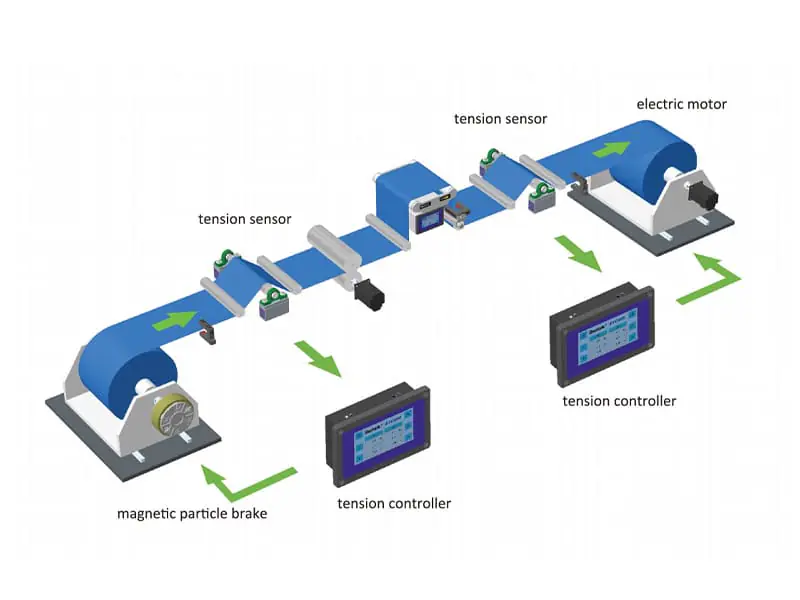
At their essence, web tension control systems maintain the ideal force on materials as they move through production lines. Here’s the step-by-step breakdown:
- Detection: Tension sensors measure the force applied to the web, converting mechanical stress into electrical signals.
- Processing: A controller analyzes these signals, comparing them to target tension values.
- Adjustment: An actuator (like a motor or magnetic particle brake) adjusts to maintain consistency.
Take our TSRN series pillow block sensors, for example. Using a strain gauge full-bridge principle, they deliver 0.3% accuracy, critical for thin films in semiconductor manufacturing. Their built-in 32-bit MCU ensures real-time response, so even sudden tension spikes are corrected before they affect your product.
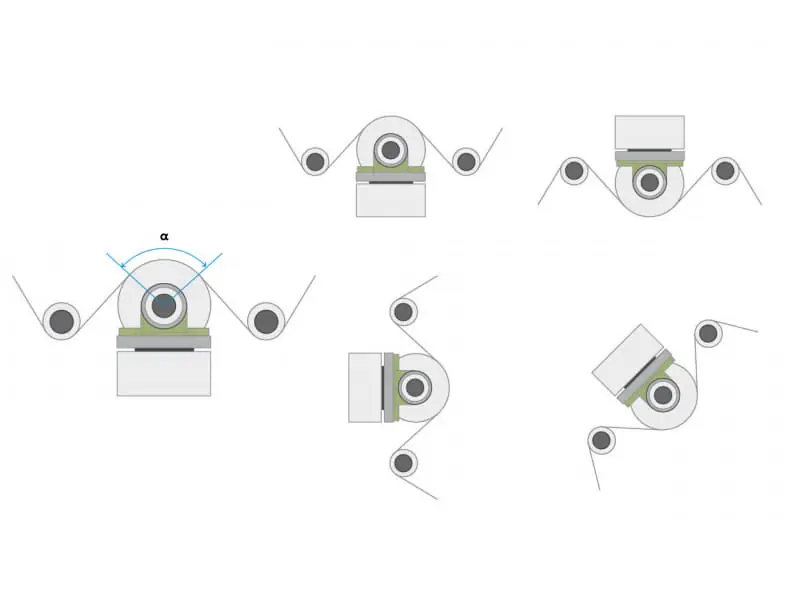
Sensors are the foundation of any reliable system. We offer three main types:
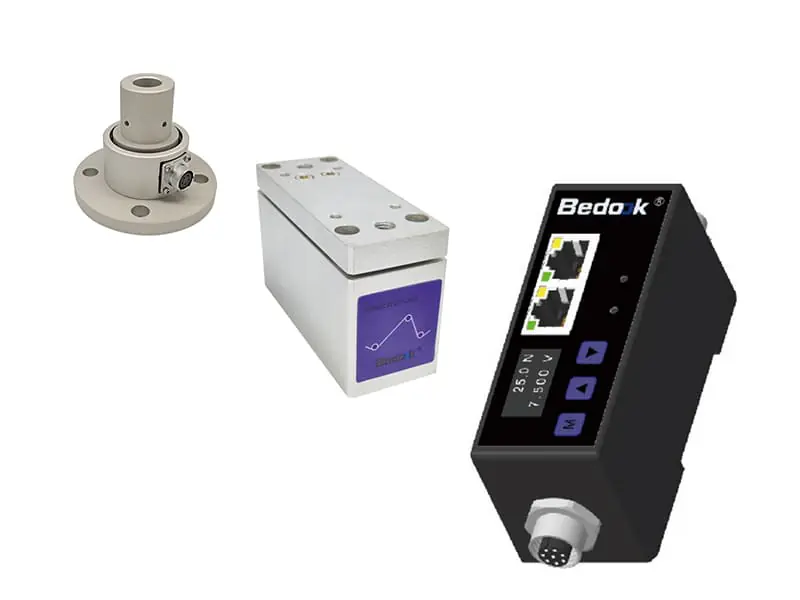
- Pillow Block Sensors: The TSRN series (range: 10–100kg) features CAN-Bus output, ideal for networking multiple sensors in a packaging line. Meanwhile, the TSRI series provides analog outputs (0–20mA/0–10V) for simpler setups, with a built-in OLED screen for easy calibration.
- Cantilever Sensors: Our TSEN models, designed for side mounting, let you install rollers directly, perfect for tight spaces in textile machines. Their safety load of 120% means they withstand unexpected surges without damage.
- Disc Sensors: The TSKN series, with a 17mm bearing hole, must be used in pairs for balance, ideal for heavy-duty applications like metal foil processing.
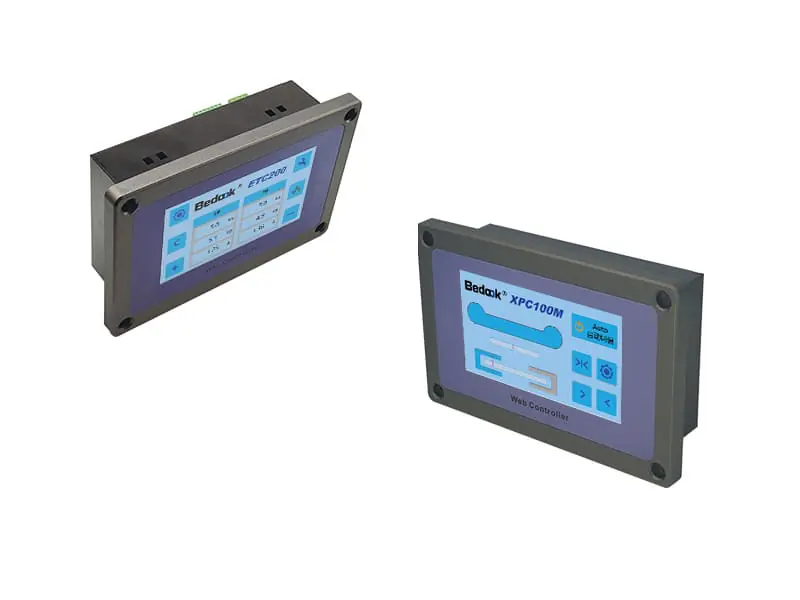
Controllers translate sensor data into action. Our ETC-200 double-channel controller supports up to 8 CAN-Bus sensors and drives magnetic particle brakes with 2A current. For servo motor setups, the MTC-100 uses CANopen communication to adjust motor speed and torque in real time, essential for winding operations in lithium battery production.
Actuators execute the controller’s commands. Whether you need a magnetic particle brake for steady tension in paper manufacturing or a servo motor for precise reel changes in film production, our systems integrate seamlessly. Many of our customers pair BEDOOK controllers with our EWD series actuators for full closed-loop control.
- Micron-Level Detection: Using strain gauge full-bridge technology, BEDOOK’s TSRN sensors achieve 0.3% accuracy, detecting tension fluctuations as low as 0.1kg—vital for processing lithium battery foils (<50μm thickness).
- Real-Time Compensation: Built-in 32-bit MCU and self-developed MVDC chips correct transient tension spikes within 1ms, ensuring material consistency.
- Diverse Structures:
- Pillow block (TSRN/TSRI): Vertical mounting, 10–100kg range for wide-format packaging;
- Cantilever (TSEN): Side-mounted with/without rollers, ideal for compact textile machines;
- Disc (TSKN): Bilateral installation for heavy-duty metal processing.
- Harsh Environment Resistance: Certified for -10°C~+60°C operation and EMC immunity, suitable for semiconductor cleanrooms and high-temperature metallurgy.
- Flexible Networking: Controllers like ETC-200 support 8-channel CAN-Bus connectivity, enabling synchronized control of multiple magnetic particle brakes.
- User-Friendly Interfaces: TSRI/TSBI sensors feature OLED screens for on-site configuration, while MTC-100’s 4.3″ touchscreen displays real-time tension curves.
- Overload Protection: Sensors withstand 120% safety load (e.g., TSRN-010C-R handles 12kg instant force), with controllers offering short-circuit and over-temperature protection.
- Global Certifications: Compliant with UL standards, ISO9001, CE, RoHS, and UKCA, meeting strict European and American market requirements.
- Reduced Waste: A German new energy client cut electrode foil scrap from 8% to 3% using TSEN sensors.
- Low Maintenance: Mechanical-wear-free design ensures >50,000 hours of operation, reducing maintenance costs by 40%.
Choosing the right components starts with three factors:
- Target Tension Force: Use our formula:
Single sensor range = Safety factor × (Roller weight + Target tension × Tension angle factor)
For example, a 20kg roller, 8kg target tension, and a 1.5 safety factor call for a 30kg sensor like the TSRN-030C-R.
- Installation Space: Cantilever sensors fit where pillow block models can’t, while disc sensors require bilateral mounting.
- Output Requirements: CAN-Bus is ideal for complex networks, while analog outputs suit simpler setups.
Not sure where to start? Please contact us, and our team will guide you through these steps, helping you avoid costly mistakes.
- New Energy: In lithium battery production, our TSEN sensors with roller shafts maintain tension on electrode foils, reducing defects by 20% at a German battery plant.
- Packaging: A Dutch printing company uses our TSRI-050V-T sensors with ETC-200 controllers, cutting paper waste by 18% across their fleet of presses.
- Textiles: A Turkish fabric manufacturer relies on our cantilever sensors in their weaving machines, achieving uniform tension even with delicate silk materials.
Understanding web tension control is the first step to optimizing your production. Whether you need a single sensor or a full turnkey system, we’re here to help. Connect with our engineers—they’ll walk you through how BEDOOK solutions can fit your unique needs.
Because in today’s competitive market, precision isn’t just a buzzword—it’s the difference between good products and great ones. Let’s build that difference together.
Extended reading:
What is Web Tension & Web Guiding System? Its Characteristics And How To Choose
What Is Web Guiding Control System? The Technical Secret to Keeping Materials on Track
How to Choose the Best Web Tension & Guiding System Manufacturer: Why Bedook Stands Out
Bedook Web Tension Control Products: Precision That Transforms Your Production Line
Bedook Web Guiding Control Products: Precision That Stops Deviation in Its Tracks
How to Select Bedook Web Tension Control System: A Step-by-Step Guide for Precision
How to Select Bedook Web Guiding Control System: A Practical Guide for Precision
Explore Bedook: Your Trusted Sensor Manufacturer
At Bedook, we specialize in designing, developing, and manufacturing a comprehensive range of proximity sensors and switches. Our extensive product lineup includes:
With over 10,000 detailed product variations and a robust R&D team, we take pride in our ability to meet your unique requirements with tailored solutions and reliable performance.
Whether you’re seeking off-the-shelf products or customized designs, Bedook offers the expertise and production capacity to ensure your satisfaction.
We value your interest in our products and warmly encourage you to send us an inquiry. Let us help you find the perfect sensor solution for your application.
Thank you for considering Bedook—your trusted partner in innovation and quality manufacturing. We look forward to collaborating with you!

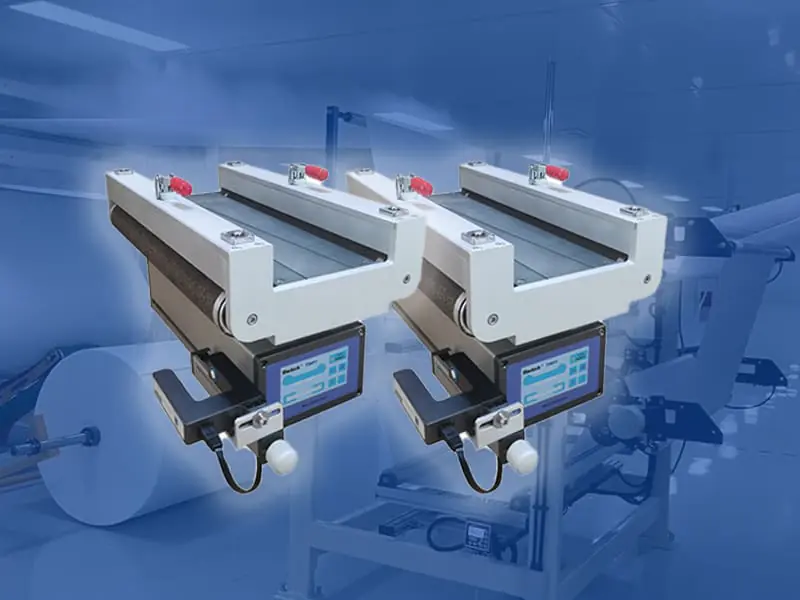 What Is Web Tension & Web Guiding System? Its Characteristics And How To Choose
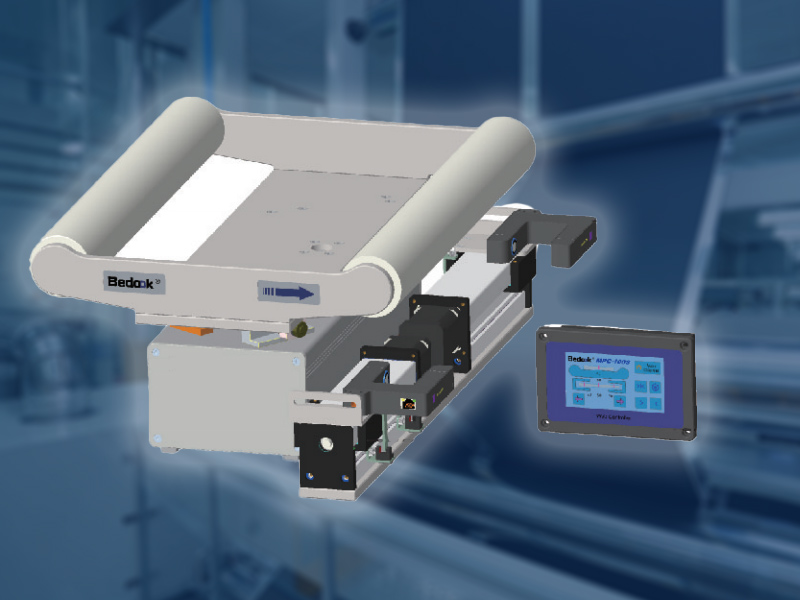 What Is Web Guiding Control System? The Technical Secret to Keeping Materials on Track