IP Ratings for Proximity Sensors: What IP67 Does and Does Not Protect Against
In industrial automation, the IP rating of a proximity sensor directly affects its service life and reliability in environments exposed to dust, moisture, and chemical liquids.
IP67 is one of the most commonly used protection ratings in industrial applications and is often treated as a “default choice.” However, this assumption frequently leads to misunderstandings. Many engineers interpret IP67 as “fully waterproof and dustproof,” assuming it can withstand all harsh environments.
In practice, this misconception often results in premature sensor failure, unexpected downtime, and increased maintenance costs.
This article clarifies the actual protection limits of IP67 from an engineering perspective. It explains what IP67 protects against, what it does not, and how to select the appropriate IP rating based on real operating conditions.
Why IP Ratings Matter for Proximity Sensors
Industrial environments expose sensors to multiple risk factors, including:
- dust and metal particles
- water splashes and condensation
- cooling fluids and cleaning agents
These factors can lead to:
- internal short circuits
- signal instability
- corrosion of sealing materials
The IP (Ingress Protection) rating defines the sensor’s ability to resist solid particles and liquid ingress.
However, it is important to understand that:
IP ratings only address protection against dust and liquids.
They do not cover resistance to vibration, temperature, or electromagnetic interference.
Selecting the correct IP rating is therefore about matching the application, not simply choosing the highest level.
What Does IP67 Actually Mean?
An IP rating consists of two digits:
- The first digit indicates protection against solids
- The second digit indicates protection against liquids
IP67 combines:
- IP6X – complete protection against dust
- IPX7 – protection against temporary immersion in water
The key limitation is that these ratings are defined under standardized test conditions, not real industrial environments.
Dust Protection (IP6X)
IP6X represents the highest level of dust protection.
Under standard test conditions, the sensor enclosure prevents all dust ingress, including fine particles and metal debris.
This makes IP67 suitable for environments such as:
- machining
- mining
- cement production
However, in real applications involving continuous vibration or high-speed dust impact, improper installation may still compromise sealing performance.
Water Protection (IPX7)
IPX7 protects against temporary immersion in water.
Under standard conditions:
- immersion depth: up to 1 meter
- duration: up to 30 minutes
- water type: static (no flow or pressure)
This protection is designed for accidental exposure, such as splashes or temporary flooding.
It is not intended for continuous or dynamic water exposure.
What IP67 Does NOT Protect Against
This is the most critical section for real-world applications.
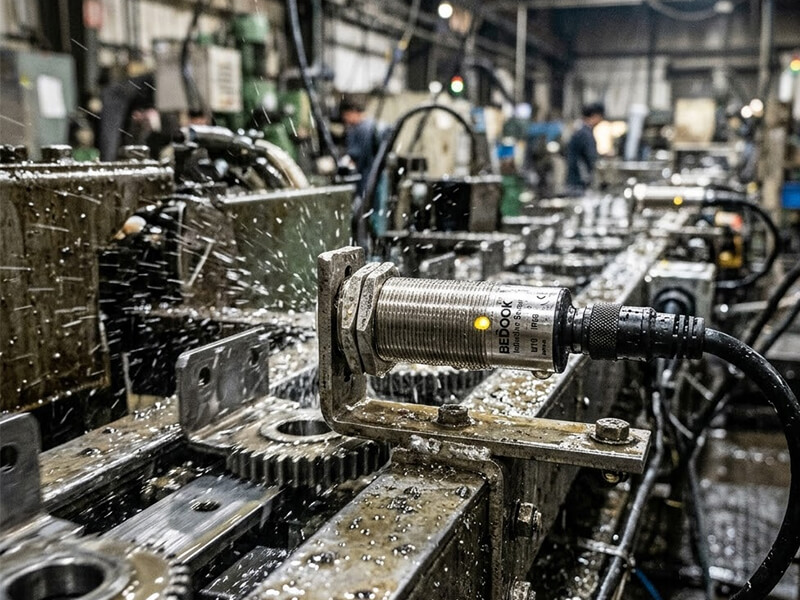
High-Pressure Water Jets
IP67 does not protect against high-pressure water.
In industries such as food processing or automotive manufacturing, cleaning processes often involve high-pressure washdown (e.g., CIP systems).
High-pressure water can penetrate seals and cause:
- water ingress
- internal short circuits
- signal instability
For these applications, IP69K-rated sensors are typically required.
Long-Term Submersion
IP67 is not designed for continuous immersion.
In applications such as:
- wastewater treatment
- submerged equipment
long-term exposure to water pressure can degrade sealing materials and eventually lead to leakage.
In such cases, IP68 is required, with specific immersion conditions defined by the manufacturer.
Chemical Exposure
IP ratings do not account for chemical resistance.
In environments involving:
- cutting fluids
- coolants
- cleaning chemicals
liquids may degrade sealing materials or housing components, leading to failure.
Material selection (e.g., stainless steel housing, chemical-resistant seals) is critical in these cases.
High-Temperature Water
IP67 does not guarantee resistance to hot water.
In applications such as food processing, cleaning may involve water temperatures above 80°C.
High temperatures accelerate:
- seal aging
- material deformation
- loss of sealing performance
For these environments, IP69K is more suitable.
| Rating | Protection Level | Typical Application |
| IP67 | Temporary immersion | General industrial use |
| IP68 | Continuous immersion | Submerged applications |
| IP69K | High-pressure, high-temperature washdown | Food & pharmaceutical |
Note: IP68 conditions vary by manufacturer and should always be verified.
How to Choose the Right IP Rating
General Industrial Applications
- Dust + occasional water exposure
👉 IP67 is usually sufficient
Food and Beverage Industry
- High-pressure and high-temperature cleaning
👉 IP69K required
Dusty and Vibrating Environments
- Mining, cement, metallurgy
👉 IP67 (with proper installation)
Wet or Submerged Environments
- Wastewater treatment
👉 IP68 required
Chemical Environments
- CNC machining, chemical processing
👉 IP rating + material compatibility
Common Misunderstandings About IP Ratings
“IP67 Means Waterproof”
IP67 only protects against temporary immersion under controlled conditions, not all water exposure.
“All IP67 Sensors Perform the Same”
Actual protection depends on:
- sealing design
- material quality
- manufacturing process
“Higher IP Is Always Better”
Higher ratings increase cost and may not be necessary for all applications.
The correct approach is application-based selection.
Conclusion
IP ratings should be understood as guidelines under defined test conditions, not guarantees of performance in all environments.
IP67 offers a practical balance between protection and cost, but it is not suitable for every application.
Understanding its limitations allows engineers to:
- Avoid premature failures
- Select appropriate protection levels
- Ensure long-term system reliability
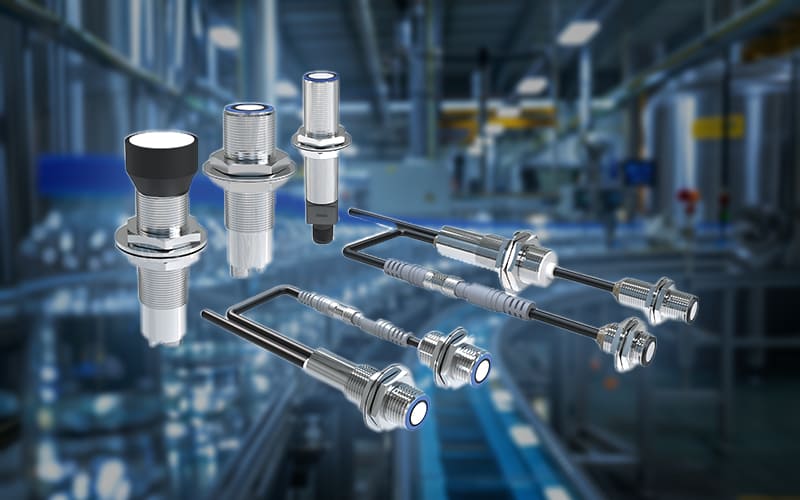
Bedook proximity sensors cover all protection ratings (IP67, IP68, IP69K) for diverse industrial applications. Featuring strictly tested sealing structures, they precisely meet different operational needs. If you are unsure which IP rating to choose for your site, contact Bedook’s technical team for free adaptation advice to avoid protection misunderstandings and ensure stable equipment operation.
Explore Bedook: Your Trusted Sensor Manufacturer
At Bedook, we specialize in designing, developing, and manufacturing a comprehensive range of proximity sensors and switches. Our extensive product lineup includes:
- Inductive Proximity Sensors
- Capacitive Proximity Sensors
- Photoelectric Sensors
- Ultrasonic Sensors
- Solid State Relays
- Various Accessories
With over 10,000 detailed product variations and a robust R&D team, we take pride in our ability to meet your unique requirements with tailored solutions and reliable performance.
Whether you’re seeking off-the-shelf products or customized designs, Bedook offers the expertise and production capacity to ensure your satisfaction.
Get in Touch Today!
We value your interest in our products and warmly encourage you to send us an inquiry. Let us help you find the perfect sensor solution for your application.
Thank you for considering Bedook—your trusted partner in innovation and quality manufacturing. We look forward to collaborating with you!
 False Triggering in Inductive Sensors: Causes and Practical Solutions
 Response Time vs Output Type: What Impacts Detection Accuracy