False Triggering in Inductive Sensors: Causes and Practical Solutions

Why False Triggering Is So Difficult to Diagnose
In industrial automation systems, false triggering is one of the most frustrating and difficult-to-diagnose problems.
A sensor may appear to be working normally, yet it generates unexpected signals that cause machine errors, incorrect counting, or even unplanned downtime.
In most cases, false triggering is not caused by sensor failure—but by application conditions, installation issues, or environmental factors that are often overlooked.
What Is False Triggering in Inductive Sensors
False triggering occurs when a sensor outputs a signal:
- Without a valid target
- Or multiple times for a single target
Typical symptoms include unstable signals, unexpected machine actions, and inconsistent counting.
Common Causes of False Triggering
False triggering is usually not random. It is the result of mismatched conditions between the sensor and its environment.
1. Metal chips accumulation
Accumulated metal debris can be detected as a target, leading to unexpected triggering.
2. Improper installation distance
Too close or too far can cause interference or unstable detection.
3. Misalignment
Incorrect positioning reduces detection stability and increases sensitivity to interference.
4. Electrical interference (EMI)
Motors, VFDs, and power cables can disrupt signal processing.
5. Vibration
Movement of the sensor position causes signal fluctuation.
6. Temperature variation
Thermal drift affects internal components and signal stability.
7. Moisture and coolant
Surface contamination or internal leakage can alter sensing behavior.
Typical Industrial Scenarios Where False Triggering Occurs
False triggering is more likely in:
- CNC machine tools
- Conveyor systems
- Packaging lines
These environments combine contamination, vibration, and electrical interference.
Step-by-Step Troubleshooting Guide
A structured troubleshooting approach is critical.
- Check installation
Ensure the sensor is firmly mounted and properly aligned - Verify sensing distance
Maintain 60–70% of the rated sensing range - Inspect contamination
Remove metal chips, oil, and moisture - Evaluate interference
Separate signal cables and use shielding - Test the sensor independently
Confirm whether the issue is environmental or sensor-related
This process allows engineers to identify the root cause efficiently.
Practical Solutions to Improve Detection Stability
To reduce false triggering:
- Optimize installation and alignment
- Control sensing distance
- Apply proper shielding
- Maintain clean sensing surfaces
- Select sensors suitable for harsh environments
These measures significantly improve system reliability.
How to Prevent False Triggering in Long-Term Operation
For long-term stability:
- Perform regular maintenance and cleaning
- Avoid operating at performance limits
- Ensure proper installation from the beginning
- Select sensors with sufficient performance margin
In most industrial applications, prevention is more effective than reactive troubleshooting.
Conclusion: False Triggering Is Not Random
False triggering is not a random fault—it is a predictable result of mismatched application conditions.
By identifying root causes and optimizing installation, environment, and sensor selection, it is possible to achieve stable, reliable operation.
In practice, most false triggering issues can be resolved without replacing the sensor—if the real cause is correctly identified.
If you are dealing with intermittent false triggering and cannot identify the root cause, the issue is often related to installation, environment, or application mismatch rather than sensor failure.
BEDOOK offers inductive proximity sensors designed for stable operation in demanding industrial environments. Our engineering team can help analyze your application conditions and recommend practical solutions to improve detection reliability.
Explore Bedook: Your Trusted Sensor Manufacturer
At Bedook, we specialize in designing, developing, and manufacturing a comprehensive range of proximity sensors and switches. Our extensive product lineup includes:
- Inductive Proximity Sensors
- Capacitive Proximity Sensors
- Photoelectric Sensors
- Ultrasonic Sensors
- Solid State Relays
- Various Accessories
With over 10,000 detailed product variations and a robust R&D team, we take pride in our ability to meet your unique requirements with tailored solutions and reliable performance.
Whether you’re seeking off-the-shelf products or customized designs, Bedook offers the expertise and production capacity to ensure your satisfaction.
Get in Touch Today!
We value your interest in our products and warmly encourage you to send us an inquiry. Let us help you find the perfect sensor solution for your application.
Thank you for considering Bedook—your trusted partner in innovation and quality manufacturing. We look forward to collaborating with you!
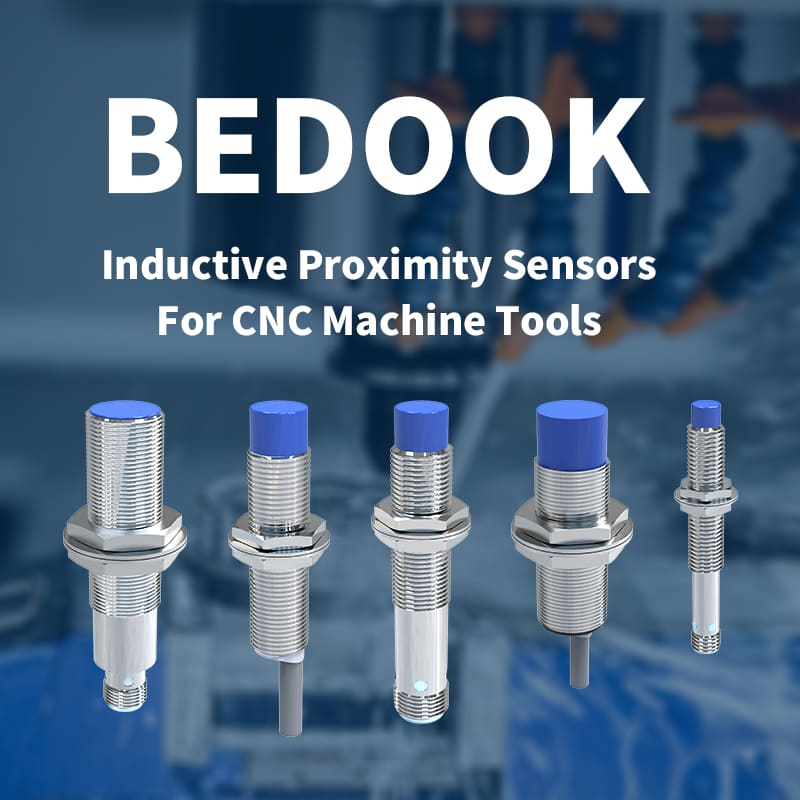 Using Inductive Proximity Sensors in CNC Machine Tools