Photoelectric Switch vs. Proximity Switch: How to Choose for Your Automation Line?
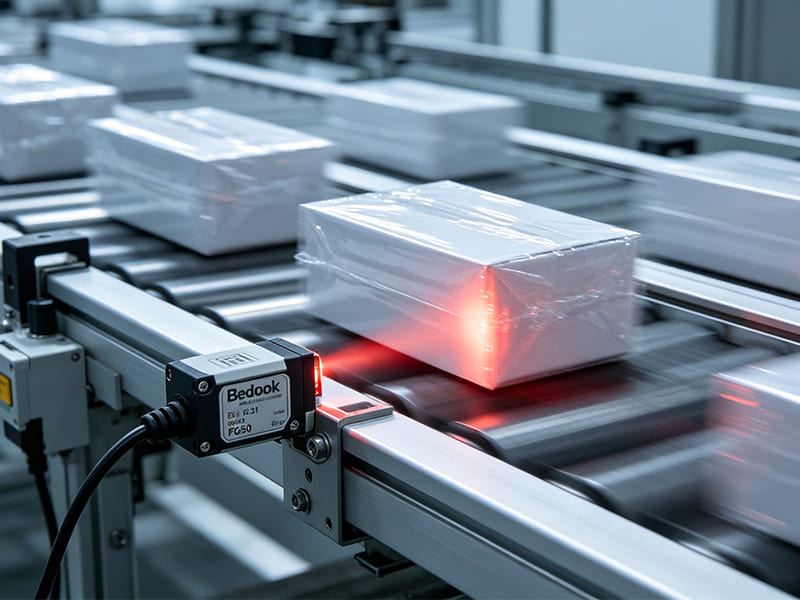
In the architecture of modern factory automation, non-contact positioning sensors act as the crucial “eyes” of the production line. Selecting the right sensor can mean the difference between a smoothly running, high-efficiency assembly line and a high-maintenance system plagued by frequent false triggers and costly downtime.
When configuring automation loops, engineers and procurement managers often face a fundamental dilemma: Should we use a photoelectric switch or a proximity switch?
While both belong to the broad category of non-contact position sensors, their underlying physics, operational parameters, and industrial ideal-use cases are vastly different. In the industrial automation shorthand, a “proximity switch” typically refers to inductive or capacitive sensors that detect nearby objects via electromagnetic fields or changes in capacitance. Conversely, a “photoelectric switch” relies on the emission and interruption of modulated light beams.
With nearly 30 years of specialized experience as a leading proximity switch and photoelectric sensor manufacturer, Bedook has compiled this definitive guide to break down the 5 critical differences between these two industrial workhorses, helping you make the right engineering and sourcing decisions.
Quick Summary: The Comparison Matrix
To secure a fast understanding before diving into technical details, let’s look at the core performance parameters of a photoelectric switch vs. a proximity switch:
| Feature | Proximity Switch (Inductive/Capacitive) | Photoelectric Switch (Optical) |
| Sensing Principle | Electromagnetic Field / Capacitance Change | Modulated Light Beam (Infrared/Red/Laser) |
| Sensing Distance | Short (Typically 1mm to 40mm) | Long (Up to 15 meters or more) |
| Target Material | Ferrous Metals (Inductive); Liquids & Solids (Capacitive) | Virtually Any Solid Object (Opaque/Transparent) |
| Response Speed | Fast switching frequency (Up to kHz range) | Extremely fast response time (Sub-millisecond) |
| Environmental Resilience | Immune to grease, dust, oil, and ambient light | Requires proper IP rating/filtering for harsh environments |
| Cost Profile | Highly budget-friendly & economical | Mid-to-high investment with multi-scenario flexibility |
5 Critical Differences You Must Know Before Buying
① Sensing Distance: The Game-Changer
The most immediate factor that separates these two sensor types is the physical gap between the sensor face and the target object.
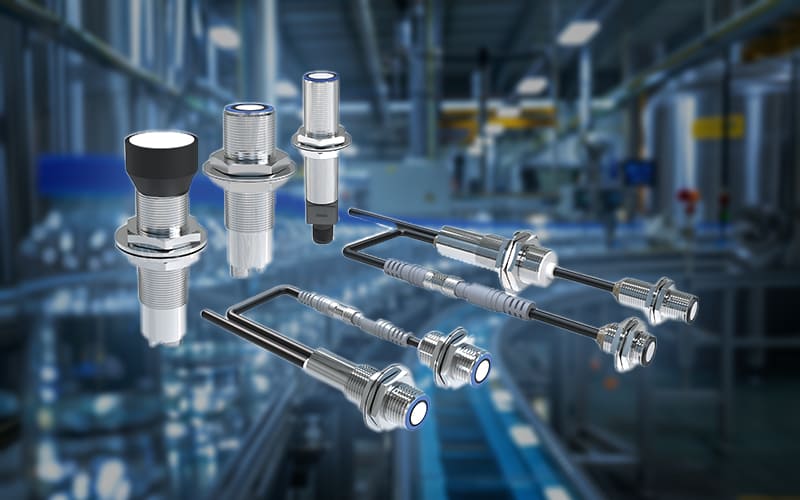
Standard proximity switches are inherently short-range devices. An inductive proximity switch relies on an eddy current field that attenuates rapidly with distance, usually offering a maximum stable sensing range of 1mm to 40mm.
If your application requires detecting components from several meters away, a photoelectric switch is the only viable choice. By utilizing a focused light path, photoelectric systems eliminate distance limitations. For instance, Bedook’s FM18 Through-beam Photoelectric Series can easily project a stable detection beam across a distance of 10 to 15 meters, making it ideal for large-scale conveyor tracking, automated warehousing, and safety barriers.
② Target Material & Physical Properties
What substance are you attempting to detect? The answer heavily dictates the sensor chemistry required.
-
Inductive Proximity Switches: These are strictly limited to metallic targets. They provide peak performance on ferrous metals (like steel and iron) and experience a reduction factor when detecting non-ferrous metals like aluminum or copper.
-
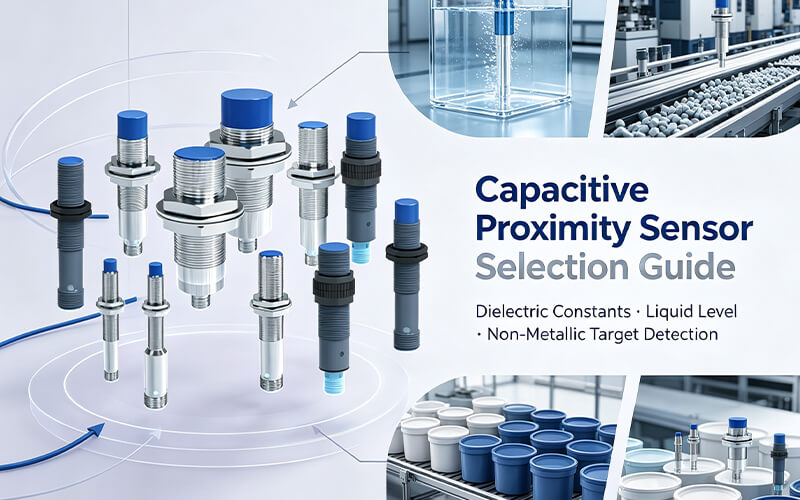
Capacitive Proximity Switches: These can detect non-metallic items, such as plastics, wood, and liquids, by sensing a shift in the electrical capacitance of the surrounding space. However, they are sensitive to environmental moisture.
-
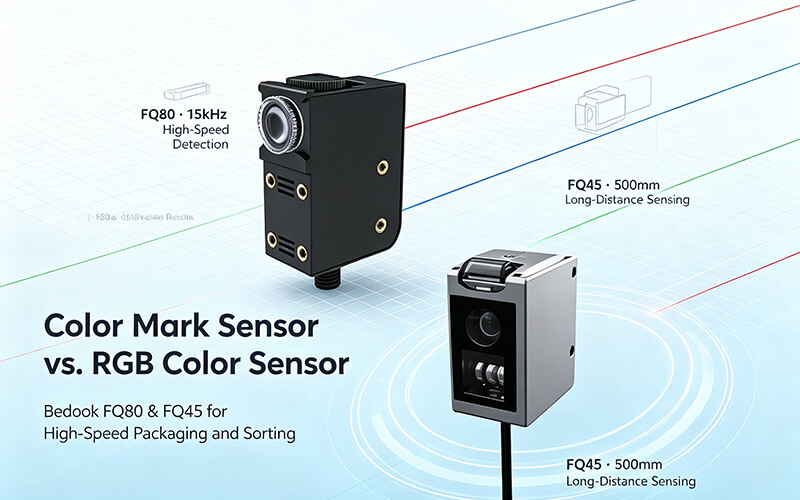
Photoelectric Switches: These transcend material limitations. As long as an object can physically block, reflect, or absorb light, it can be detected. Whether you are dealing with a matte black rubber tire, a colorful cardboard box, or a highly reflective stainless steel sheet, optical sensors can adapt. For ultra-challenging applications like clear glass or transparent plastic bottle detection on packaging lines, Bedook offers specialized models like the FQ31 Series equipped with advanced background suppression (BGS) and polarizing filters to eliminate surface glare errors.
③ Environmental Endurance: Oil, Dust, and Ambient Light
The physical environment of your workshop floor is a critical variable in the longevity of your sensors.
Traditional proximity switches are rugged beasts. Because electromagnetic fields are unaffected by non-metallic barriers, an inductive proximity switch is completely immune to thick layers of machine grease, non-magnetic metallic dust, oil splashes, and heavy ambient shop light. They are the undisputed champions inside CNC milling enclosures and heavy stamping machinery.
Photoelectric switches, historical outliers in dirty environments due to lens contamination, have evolved significantly. Bedook’s modern photoelectric switches feature ruggedized, sealed housings with up to IP67 or IP69K protection ratings. Engineered with cutting-edge optical chips, they actively filter out ambient industrial lighting interference and resist false triggers from light dust coatings, making them reliable for heavy-duty automated packaging and logistics systems.
④ Installation Space and Alignment Complexity
How much space do you have, and how much setup time can your technicians afford?
Proximity switches are incredibly compact and easy to deploy. An M12 or M18 cylindrical inductive sensor simply screws into a mounting bracket, wires back to the PLC, and goes to work without any alignment calibration.
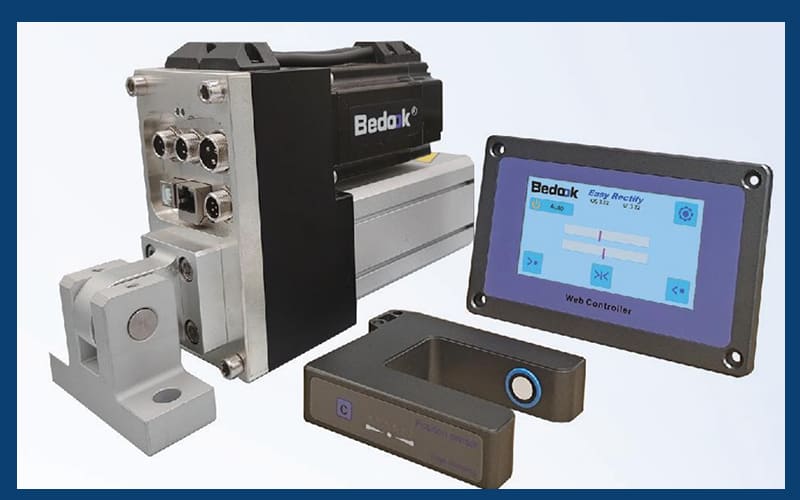
Photoelectric switches demand more strategic placement. Through-beam variations require precise geometric alignment between an emitter and a receiver unit. Retro-reflective styles require mounting a matching reflector plate opposite the sensor head. If spatial constraints or alignment labor are a concern on your assembly line, a smart solution is the Bedook FG Series Fork Sensor (Slot Sensor). Available in models like the FG25, FG50, and FG78, the emitter and receiver are built into a single integrated U-shaped bracket. The optical beam is permanently aligned at the factory—offering plug-and-play simplicity for high-speed label or edge tracking.
⑤ Sourcing Cost vs. Long-Term ROI
From a procurement standpoint, standard proximity switches offer an exceptionally low initial unit cost, making them the standard choice for high-volume, straightforward part-presence validation.
Photoelectric switches represent a slightly higher upfront component investment. However, their extreme versatility, ability to detect multi-material products without changing sensor hardware, and massive sensing ranges deliver a much higher long-term Return on Investment (ROI) in flexible, high-mix automated production environments.
Scenario-Based Selection: When to Choose Which?
To streamline your project planning, our application engineers have outlined the ideal deployment paths based on common factory floor operations:
Standard Deployments for Proximity Switches:
-
CNC Tool Position Verification: Tracking the extreme travel limits or home docking positions of metallic machine tool axes.
-
Pneumatic Cylinder Stroke Monitoring: Utilizing compact magnetic proximity switches embedded in cylinder grooves to verify rod extensions.
-
Liquid Level Sensing Through Barriers: Utilizing capacitive proximity switches mounted outside non-metallic tank walls to detect internal water or chemical levels.
Upgrades Required for Photoelectric Switches:
-
High-Speed Packaging Lines: Counting passing cardboard boxes, plastic jugs, or composite pouches on rapid conveyor tracks.
-
AGV Collision Avoidance: Providing long-distance optical range detection for automated guided vehicles to prevent floor accidents.
-
Label and Web Position Control: Deploying slot-type fork photoelectric sensors to track label gaps or alignment on continuous-feed web converting lines.
Technical Integration: Output Logic and Wiring (NPN vs. PNP)
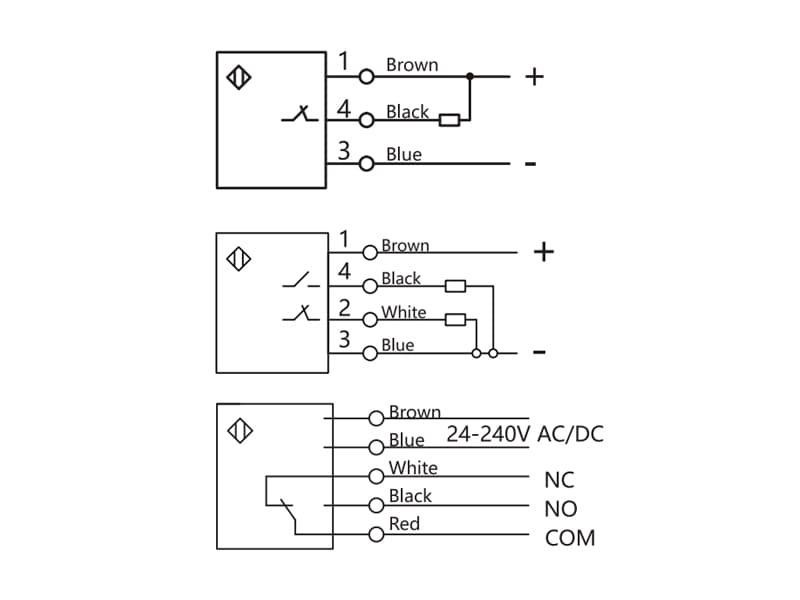
Regardless of whether your system benefits more from a proximity switch or a photoelectric switch, integrating the sensor into your automated architecture (PLC control systems) shares the same electrical logic.
When sourcing from Bedook, you can configure your sensors precisely to your control system’s electrical requirements:
-
NPN vs. PNP (Sinking vs. Sourcing): For automation lines built on Asian or North American control standards (such as Mitsubishi or Omron PLCs), NPN configuration is standard. For European automation architectures (such as Siemens or Rockwell systems), PNP wiring is typically preferred.
-
NO (Normally Open) vs. NC (Normally Closed): Depending on your fail-safe protocols, Bedook provides traditional 3-wire systems with individual NO or NC outputs, as well as highly versatile 4-wire configurations (found in our FM12, FM18, and FQ18 Series) that deliver dual NO+NC outputs from a single sensor head.
Decoding Bedook’s Part Numbers for Seamless Sourcing
As an ISO-certified, high-capacity factory, Bedook utilizes a fully standardized part numbering matrix. This systematic approach ensures that procurement agents and engineers can build, verify, and cross-reference exact specifications with absolute confidence.
By examining our official product configuration structure, you can decode any Bedook photoelectric model code directly. For example, consider the model number: FM12-T02P-P31P2
-
Type (Code 1):
Fdenotes a high-performance Photoelectric Sensor. -
Shape (Code 2):
Mindicates a Threaded Cylindrical housing. -
Dimensions (Code 3):
12specifies a compact 12mm shell diameter. -
Detection Type (Code 4):
Tidentifies a Diffuse detection method. -
Sensing Distance (Code 5):
02indicates a precise 200mm scanning range. -
Output Function (Code 6):
Psets the switching logic to PNP. -
Housing Material (Code 7):
Pstands for durable industrial Plastic (or C for nickel-plated brass). -
Output Mode (Code 8):
3indicates a dual Dark-on / Light-on configurable mode. -
Operating Voltage (Code 9):
1defines a standard DC 10-30V operating window. -
Connection (Code 10):
Pdesignates a built-in PVC Cable. -
Cable Length (Code 11):
2indicates a standard 2-meter connection length.
This clear engineering structure allows you to swap out legacy or failing sensors from other major international brands seamlessly with a reliable, factory-direct component from Bedook.
Conclusion: Partner with a 30-Year Sensor Specialist
There is no singular “better” option when evaluating a photoelectric switch vs. a proximity switch; there is only the right tool for your unique industrial environment, target material, and distance requirements. Balancing these parameters is what ensures continuous operational efficiency.
At Bedook, we manufacture a comprehensive catalog spanning inductive proximity switches, capacitive sensors, and advanced photoelectric switches (including cylindrical, rectangular, and integrated slot-type models). We don’t just supply components—we provide industrial peace of mind backed by three decades of manufacturing mastery, reliable lead times, and rigorous quality control.
Looking for an exact alternative quote to replace an Omron, Sick, or Keyence sensor? Contact our engineering sales desk today. Send us your active competitor part numbers, and our team will provide a comprehensive cross-reference guide, matching technical data sheets, and an optimized factory price quote within 24 hours!
Explore Bedook: Your Trusted Sensor Manufacturer
At Bedook, we specialize in designing, developing, and manufacturing a comprehensive range of proximity sensors and switches. Our extensive product lineup includes:
- Inductive Proximity Sensors
- Capacitive Proximity Sensors
- Photoelectric Sensors
- Ultrasonic Sensors
- Solid State Relays
- Various Accessories
With over 10,000 detailed product variations and a robust R&D team, we take pride in our ability to meet your unique requirements with tailored solutions and reliable performance.
Whether you’re seeking off-the-shelf products or customized designs, Bedook offers the expertise and production capacity to ensure your satisfaction.
Get in Touch Today!
We value your interest in our products and warmly encourage you to send us an inquiry. Let us help you find the perfect sensor solution for your application.
Thank you for considering Bedook—your trusted partner in innovation and quality manufacturing. We look forward to collaborating with you!
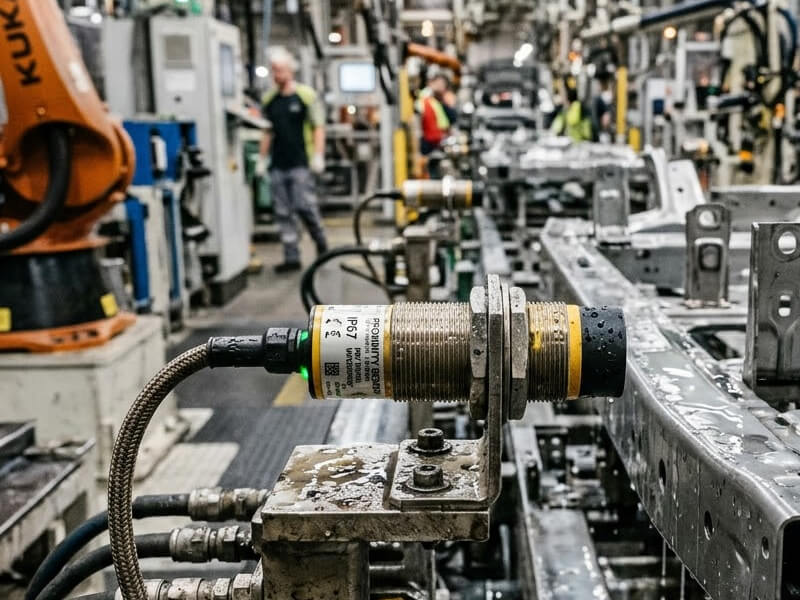 Proximity Sensors in Automotive Assembly Lines: Key Considerations
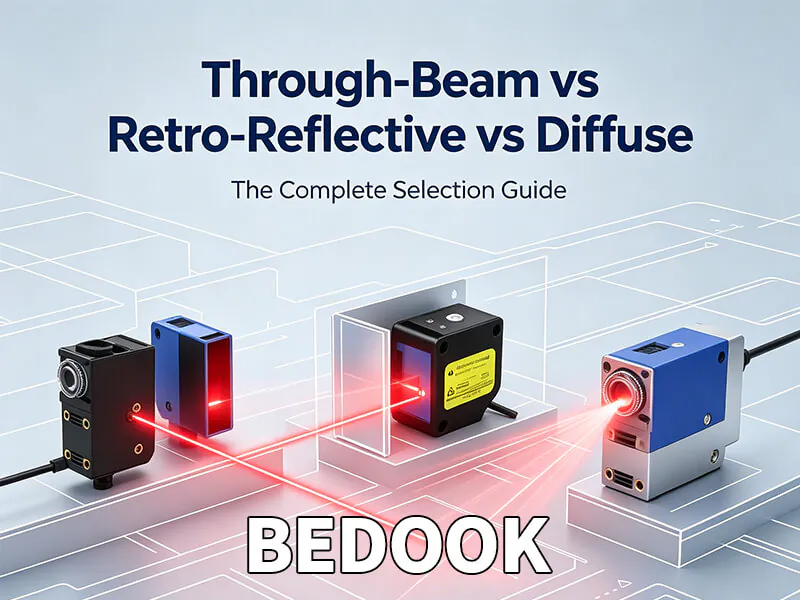 Through-Beam vs Retro-Reflective vs Diffuse Photoelectric Sensors: The Complete Selection Guide